Best Puppet Theater for Kids: Top 5 Playful Stages for Imaginative Play
Parents and educators looking to spark creativity can explore these top puppet theaters designed for kids. Each option blends sturdy construction with imaginative features to support storytelling, fine motor skills, and collaborative play. The selections below cover wooden durability, doorway-efficient designs, and versatile pop-up options suitable for indoor and outdoor use.
Overview Of Selected Products
| Product | Brand | Key Benefit |
|---|---|---|
| Melissa & Doug Deluxe Puppet Theater | Melissa & Doug | Sturdy wooden build with plush curtains and chalkboard |
| CHIUHEI Deluxe Wooden Puppet Theater | CHIUHEI | Colorful, durable wooden stage with market stand and learning flair |
| HABA Doorway Puppet Theater | HABA | Space-saving design with easy setup for doorways |
| Playbees Puppet Show Pop-Up Tent | Playbees | 2-in-1 pop-up theater and lemonade stand for versatile play |
| VitalCozy Doorway Puppet Theater | VitalCozy | Doorway fit with adjustable rods and foldable storage |
Melissa & Doug Deluxe Puppet Theater
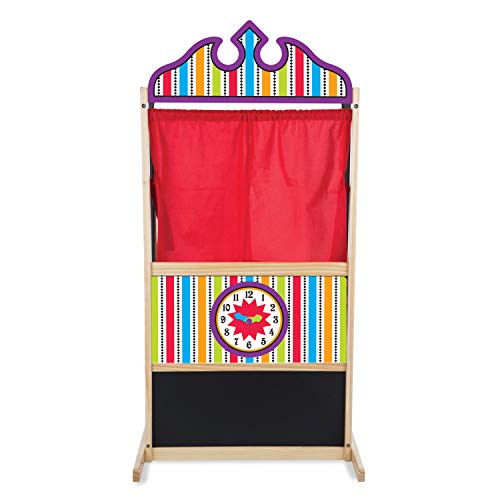
The Melissa & Doug Deluxe Puppet Theater is a classic wooden stage designed to foster imagination and storytelling. Its sturdy base helps prevent tipping during enthusiastic performances, making it suitable for active toddlers and preschoolers. Plush curtains frame the show area, while a clock and chalkboard add functional touches for timing scenes and noting scripts or audience cues. This theater emphasizes motor skill development through set preparation and stage management, as children practice coordinating props, entrances, and exits in a safe, inviting space.
CHIUHEI Deluxe Wooden Puppet Theater

CHIUHEI’s Deluxe Wooden Puppet Theater presents a bright, sturdy stage with a market stand on the back that encourages vocabulary development and social interaction. The included eagle and lion plush puppets plus four finger puppets support a range of storytelling styles, from fairy tales to educational skits. The chalkboard allows performers to outline scenes or post today’s specials, making it a flexible platform for both dramatic performances and pretend storefront play. The dual-sided design invites children to create varied scenarios without needing multiple props.
HABA Doorway Puppet Theater

HABA’s doorway puppet theater focuses on space efficiency without sacrificing pretend play. The compact design folds for storage and is ideal for small living areas or classrooms. The whimsical castle scene creates an engaging backdrop for imaginative performances, while the oval pocket can hold signs or prompts for experiments in character dialogue. This option is well-suited for toddlers and up, supporting early language development, turn-taking, and cooperative play as children trade roles and narrate scenes.
Playbees Puppet Show Pop-Up Play Tent

Playbees offers a portable, 2-in-1 solution that transforms between a puppet theater and a lemonade stand. Its pop-up design uses durable fabric and a sturdy wire frame, allowing quick setup and compact storage. The reversible sign and small stage height support imaginative storytelling for toddlers and preschoolers, enhancing narrative skills, memory, and fine motor control as kids manage props, puppets, and stage directions. The versatility makes it a practical choice for indoor playrooms and temporary outdoor setups.
VitalCozy Doorway Puppet Theater

The VitalCozy doorway theater is designed to fit most standard doorways with two adjustable rods for optimal height. Its foldable construction is ideal for quick storage, travel, or shifting between rooms. The design emphasizes creativity by providing a stage window and an additional top window, expanding performance possibilities. A transparent bottom area invites children to name the show or showcase props, encouraging interactive storytelling. This option suits families seeking a compact, transportable setup that still offers a full puppet theatre experience.
Buying Guide
- Space and setup: Prioritize the theater’s footprint and whether it suits a hallway doorway, a dedicated playroom, or outdoor use. Doorway models save space, while freestanding wooden theaters offer solidity for taller or more boisterous children.
- Material and durability: Wooden stages tend to be sturdier and longer-lasting, while fabric-and-pole designs are lighter and portable. Consider whether the product will withstand frequent handling and enthusiastic performances.
- Age range and safety: Check recommended ages and ensure there are no small detachable parts that pose choking hazards. Look for non-toxic finishes and smooth edges.
- Multifunctionality: Some models double as lemonade stands or storefronts, expanding learning opportunities (sales dialogue, price labeling, turn-taking). These can be valuable for broader imaginative play.
- Storage and portability: Foldable, pop-up, or compact designs simplify cleanup and transport. A protective carrying case or bag is a plus for outdoor or travel use.
- Included accessories: Purrs, puppets, chalkboards, and signs influence how quickly a child can start performing. Consider whether the set provides enough props or if additional puppets are needed to diversify shows.
- Maintenance: Choose materials that are easy to clean, especially for younger children who explore with hands and props. Avoid setups that require complex assembly for daily use.
- Learning value: The best options support language development, storytelling structure, memory, and social skills like cooperation and turn-taking through shared performances.
These puppet theaters offer varied paths to imaginative play, from traditional wooden stages with integrated chalkboards to portable, pop-up tents that adapt to changing playspaces. By selecting a model that aligns with your space, age range, and preferred play style, you can support expressive storytelling, fine motor development, and collaborative pretend play for kids.