Best Math Manipulatives for Kindergarten: Hands-on Learning Tools
Kindergarten math thrives on tactile exploration. The right manipulatives help young learners build number sense, counting fluency, basic operations, and early geometry with confidence. The following selected products are designed to support classroom centers, homeschool activities, and hands-on math play for ages 4–6. Each item emphasizes durable construction, bright colors, and engaging activities that promote fine motor skills and logical thinking. Use these tools to create interactive math experiences that align with early elementary standards and keep young minds curious.
| Product | Key Benefit | Ideal For |
|---|---|---|
| Learning Resources MathLink Cubes – Set of 100 | One-to-one correspondence, counting, patterns | Classroom centers, homeschooling, small-group activities |
| SpriteGru Math Linking Cubes | Colorful linking cubes with activity cards for variety | Early math practice, visual math learning, STEM integration |
| BSADIY Montessori Math Blocks | Wooden blocks for counting, simple addition/subtraction | Preschool to early kindergarten exploration |
| Learning Resources Pattern Block Math Activity Set | Patterning, symmetry, geometry with 144 pieces | Hands-on geometry and critical thinking activities |
| Learning Resources MathLink Cubes Fantasticals | Sequencing, addition, subtraction with themed challenges | Kindergarten math skills through imaginative play |
Learning Resources MathLink Cubes – Set of 100 Cubes
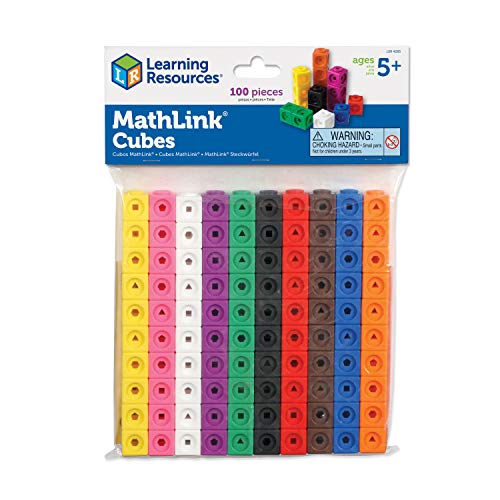
These MathLink Cubes provide a versatile base for early math exploration. With 100 cubes in a set, students can practice counting to 100, one-to-one correspondence, and skip counting through guided activities. The cubes also support nonstandard measurements, making ten, and simple addition and subtraction. Built to snap together on all sides, they enable complex patterning and carpentry-like sequencing. The color-coded pieces support color and shape identification, patterning, and graphing activities, while also helping develop fine motor skills and eye-hand coordination. Teachers can use them for quick number talks, small-group warmups, or independent centers. The set is suitable for homeschool or classroom use and pairs well with Montessori-style explorations as a tactile math companion.
Features include:
– One-to-one correspondence and counting to 100
– Patterning, matching, and color/shape identification
– Tools for addition, subtraction, and basic graphing
– Fine motor and motor planning benefits
– Compatibility with diverse math activities and classroom routines
SpriteGru Math Linking Cubes

SpriteGru offers a value-packed linking cube set with 100 cubes in ten colors, plus a reusable double-sided card, dry erase markers, and star stickers. The cubes are easy for young learners to connect, supporting intuitive understanding of color, quantity, height, and place value. The included activity card supports teachers and parents with structured tasks while leaving room for imaginative construction projects—such as building names or simple devices—that reinforce math concepts through play. This set is well-suited for homeschool, math centers, and classroom demonstrations that emphasize hands-on discovery.
Key aspects include:
– Colorful, interoperable counting cubes for quick math practice
– An included activity card plus additional dry erase tools for versatility
– Helps with counting, sorting, place value, addition, and subtraction
– Encourages creative construction to deepen number sense
BSADIY Montessori Math Blocks

These Montessori-style wooden blocks offer a tactile path from number recognition to counting and basic addition/subtraction. The natural wood design emphasizes a smooth, splinter-free surface suitable for repeated use. Children can explore counting by pairing finger boards with numbered wooden blocks, promoting logical thinking, problem solving, and a growing interest in math. The durable construction supports frequent handling in busy classrooms or homes, making them a long-lasting tool for early math mastery. They are ideal for preschool and kindergarten activities, family learning, and enriching a math corner with open-ended play.
Highlights include:
– Wooden, durable construction for daily use
– Supports counting, simple addition, and subtraction
– Encourages curiosity and logical thinking
– Safe, smooth finish suitable for young children
Learning Resources Mathswatters Addition & Subtraction Game

Mathswatters blends fast-paced play with core arithmetic practice. Students grab a swatter, perform simple addition or subtraction, and swat to reveal new problems. The game is designed for 1–4 players, offering multiple ways to play—competitive, cooperative, or solo. Built from durable wipe-clean plastic and sturdy cardboard, it’s suitable for home use or classroom centers. The activity supports number sense, fluency with small numbers, and rapid retrieval of basic operations, helping kids build confidence in math through engaging, repeatable rounds.
Key points:
– Fun, fast-paced practice for addition and subtraction
– Flexible play options for different classroom setups
– Durable materials suitable for repeated use
– Supports mental math development and speed alongside accuracy
Learning Resources Big Time Mini Clock

The Big Time Mini Clock introduces early time-telling concepts with a hands-on approach. The design features hidden gears to illustrate how time progresses as hands move, and color-coded hour/minute hands align with the clock face for easy learning. This resource supports time literacy, a foundational math area often challenging for young learners. Use in small groups or as a center activity to reinforce telling time, routine planning, and temporal understanding—complementing other manipulatives that build numerical fluency.
Considerations include:
– Hands-on time-telling practice
– Visual alignment of hours and minutes through color-coded hands
– Durable, classroom-friendly construction
– Integration with other math centers for a full early numeracy block
Learning Resources Pattern Block Math Activity Set

Pattern blocks offer a robust way to explore geometry, symmetry, and spatial reasoning. This set includes 124 plastic pattern blocks and 40 double-sided activity cards with 20 challenges, guiding children through a progression of tasks that nurture critical thinking. The blocks are compatible with existing pattern block sets, enabling seamless integration with prior kits. As students manipulate shapes to create patterns and solve problems, they also practice language around geometric properties and relationships, reinforcing math literacy during play and structured activities.
Features include:
– 124 pattern blocks plus 40 double-sided activity cards
– Challenges that introduce symmetry, patterning, and geometry
– Compatibility with other pattern block sets for expanded learning
– Encourages hands-on exploration and spatial reasoning
Learning Resources MathLink Cubes Kindergarten Activity Set: Fantasticals

MATH skills meet fantasy building with this themed MathLink Cubes activity set. It focuses on sequencing, addition, subtraction, and more through 15 double-sided activity cards. Students can explore mathematical ideas while constructing fantastical creatures or scenes, blending storytelling with arithmetic practice. The hands-on nature of the cubes supports retention and engagement, making it suitable for both independent work and guided instruction in kindergarten classrooms or homeschool settings.
Highlights include:
– Themed activities that promote sequencing and basic operations
– 15 double-sided cards for varied practice
– Encourages imaginative building alongside math learning
– Complementary to other MathLink Cube sets for a cohesive learning toolkit
Buying Guide
Choosing the right math manipulatives for kindergartners involves balancing durability, age appropriateness, and instructional goals. Consider the following factors:
-
<li.durability and safety: Look for sturdy plastics or wood with smooth finishes and no sharp edges. Large pieces reduce choking hazards for younger learners.
<li.multipurpose value: Select items that support counting, basic operations, geometry, time-telling, and patterning to cover core standards with fewer purchases.
<li.user experience: Bright colors, clear connectors, and easy-to-grip pieces help sustain attention and improve fine motor development.
<li.teacher and caregiver resources: Activity cards, lesson suggestions, and alignments to standards help maximize classroom use and homeschooling efficiency.
<li.compatibility: Consider whether the set works with other existing kits in your curriculum so you can expand learning without redundancy.
When evaluating options, weigh the balance of guided activities (cards and structured games) versus open-ended play (free building and exploration). A mix often yields the best outcomes, supporting both procedural fluency and conceptual understanding. For programs emphasizing early geometry, include pattern blocks and linking cubes; for fluency and number sense, prioritize counting cubes and timing-based activities.