Best Learning Kits for Kids to Spark STEM Curiosity
Exploring science, technology, engineering, and math (STEM) through hands-on learning can build lasting curiosity. The following learning kits for kids offer interactive experiences—from electronics projects to chemistry experiments and plant biology—that align with different ages and interests. Each pick focuses on safe, age-appropriate activities that reinforce core skills while keeping kids engaged.
| Product | Recommended Age | Focus Area | Key Benefit |
|---|---|---|---|
| Snap Circuits Jr. SC-100 | 8+ | Electrical circuits | Builds practical electronics knowledge with 100+ projects |
| Fizzy Volcano | 4+ | Chemistry & Observation | Introduces chemical reactions with safe, colorful experiments |
| National Geographic Chemistry Set | 4-6 | Chemistry & Lab Skills | 50 hands-on experiments with clear instructions |
| Grow ‘N Glow Terrarium | 6-8 | Biology & Ecology | Mini ecosystem project that glows at night |
| Doctor Jupiter Science Kit | 4-8 | General STEM & Experiments | 100+ experiments to foster critical thinking |
Note: The table highlights a cross-section of options to support different age ranges and STEM themes—from electronics and chemistry to biology and ecological observation. Each kit has its own instructional style, so you can pair multiple kits for a broader science curriculum at home or in the classroom.
Snap Circuits Jr. SC-100 Electronics Exploration Kit

Designer Brand: Snap Circuits
Overview: This introductory electronics kit provides a safe, structured way for children 8 and older to learn the basics of electrical engineering. With over 100 projects and a full-color instruction manual, kids assemble real circuit-based gadgets from a single box. The kit includes 29 parts and a variety of project ideas, from a flying saucer to an alarm. It’s an excellent option for persistent curiosity and foundational problem-solving.
Educational Value: The hands-on projects reinforce core STEM concepts such as circuits, conductivity, and component identification. The colorful guide supports independent or guided learning, enabling kids to test, iterate, and troubleshoot as they build.
Why It Stands Out: The breadth of projects means continuous play without immediate repetition, which helps maintain engagement for curious minds while developing fine motor skills and logical thinking.
Learning Resources Fizzy Volcano

Brand: Learning Resources
Overview: A 13-piece science kit designed for preschool to early elementary students to explore fizzing and foamy reactions. The kit comes with a full-color guide outlining 10 experiments that help young learners observe scientific phenomena, develop basic measurements, and begin forming hypotheses.
Educational Value: The included kid-sized tools improve fine motor skills as children measure, pour, and observe reactions. The hands-on format supports early scientific literacy and inquiry-based learning, making it a bridge to more advanced experiments later.
Why It Stands Out: Its approachable experiments and vivid visuals help spark curiosity in younger kids and set the stage for later, more complex STEM activities.
National Geographic Kids Junior Chemistry Set

Brand: Blue Marble
Overview: This complete early-learning chemistry lab kit includes 50 experiments and more than 20 lab tools designed for kids aged 4-6. Clear, illustrated instructions guide young scientists through safe, kid-friendly chemistry with common household items like baking soda and vinegar.
Educational Value: The kit emphasizes procedural literacy, measurement, and observation, helping children understand cause-and-effect in a controlled lab setting. It also introduces basic safety practices and scientific terminology in a playful way.
Why It Stands Out: The emphasis on simple, repeatable experiments makes it a reliable starter kit for establishing a routine of scientific exploration at home or in early education settings.
Root Viewer Kit for Kids with 6 Seed Varieties

Brand: PLANTMEW
Overview: A gardening-focused STEM kit featuring six distinct seed varieties. Kids observe plant growth and root formation through a transparent planter, turning a simple plant into a week-by-week learning experience about life cycles, photosynthesis, and root systems.
Educational Value: This kit fosters patience, observation skills, and data collection as kids track growth, compare species, and discuss environmental factors affecting development. It also reinforces basic botany concepts in a hands-on format.
Why It Stands Out: The living aspect of the project—watching real plant growth—provides a tangible, ongoing science narrative that can span weeks or months, promoting sustained curiosity.
Creativity for Kids Grow ‘N Glow Terrarium Kit

Brand: Creativity for Kids
Overview: This terrarium kit blends biology with craft, allowing kids to plant and cultivate a small ecosystem that glows at night. The kit includes a terrarium jar, soil, chia and wheatgrass seeds, glow-in-the-dark figurines, and decorative elements for personalization.
Educational Value: It introduces ecosystem concepts, plant care, and basic ecology while incorporating art and design, encouraging creativity alongside scientific thinking. The glow feature adds a memorable, engaging twist to the science project.
Why It Stands Out: The dual focus on science and creativity results in a visually striking, tactile learning experience that is easy to share with family and friends.
Science Kit for Kids by Kuovei

Brand: Kuovei
Overview: This kit provides a broad variety of experiments, including activities like rainbow rain, erupting volcanoes, and rainbow fountains. It emphasizes hands-on experimentation, enhancing problem-solving and critical thinking through 80+ activities.
Educational Value: Clear guidance cards outline steps and underlying scientific principles, helping children progress from simple to more challenging tasks while building confidence and independent exploration.
Why It Stands Out: The wide range of experiments keeps kids engaged over time and supports a growing science curiosity with practical, observable results.
National Geographic Human Body Model for Kids
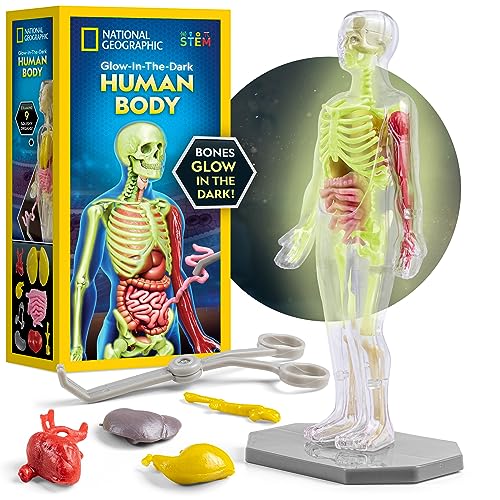
Brand: Blue Marble
Overview: This 32-piece anatomy model lets kids explore the human body by removing organs, bones, and muscles from a 9″ shell. Glow-in-the-dark bones add an extra dimension to learning, with a display stand and a comprehensive learning guide.
Educational Value: The model provides tactile anatomy learning, reinforcing memory through hands-on interaction, while the glow-in-the-dark bones help visualize the skeletal structure in a memorable way.
Why It Stands Out: The combination of removable components, a structured guide, and a display setup makes it a durable, classroom-friendly resource for early anatomy and physiology exploration.
Doctor Jupiter My First Science Kit

Brand: Doctor Jupiter
Overview: A family-friendly kit featuring 100+ experiments designed to foster early scientific curiosity. The activities emphasize observation, question framing, and hands-on exploration beyond screens, suitable for a range of ages.
Educational Value: The kit promotes problem-solving, hypothesis testing, and measurement skills in an approachable, age-appropriate manner. It supports guided play and independent investigation, adapting to different learner paces.
Why It Stands Out: The enduring catalog of experiments provides long-term value for households seeking repeated, varied science play without excessive screen time.
Buying Guide for Kids’ Learning Kits
- Age appropriateness: Choose kits with clearly stated age ranges to match cognitive development and safety considerations. Some kits are ideal for early learners, while others suit older children exploring more complex concepts.
- Educational goals: Identify the primary learning outcomes—electronics, chemistry, biology, or general STEM inquiry—and select kits that align with your child’s interests and your curriculum goals.
- Safety and materials: Look for non-toxic components, child-safe tools, and clearly labeled safety guidelines. Reusable kits with durable components can offer long-term value and reduce waste.
- Hands-on vs. guided learning: Some kits include comprehensive instructions, while others encourage experimentation and independent problem-solving. A mix can balance structure and exploration.
- Expanding value: Consider kits that complement each other or can be used with additional accessories. This enables extended projects and progressive learning paths without frequent new purchases.
- Engagement factors: Visuals, color-coding, and interactive elements help maintain interest. Kits with real-world applications are often more motivating for kids.
- Care and storage: Ensure there is a dedicated space for projects and that components are easy to organize. Durable storage encourages ongoing use and reduces misplacement.
- Accessibility: For households with multiple children or learning needs, look for kits that offer scalable challenges or multiple activity guides to accommodate varied skill levels.