Best Engineering Kits for Teens: Hands-on STEM Projects for Young Builders
Entrepreneurial curiosity and practical problem-solving thrive with the right engineering kits for teens. This guide highlights five standout kits that blend mechanical design, coding, and real-world engineering concepts. Each option is designed to engage teens with interactive builds, clear instructions, and room to explore advanced ideas as their skills grow. Read on to compare features, learning outcomes, and what makes each kit suitable for teens eager to explore STEM in a hands-on way.
| Product | Brand | Key Focus |
|---|---|---|
| Teach Tech Hydrobot Arm Kit | TEACH TECH | Hydraulics, robotics |
| ELEGOO UNO R3 Smart Robot Car Kit V4 | ELEGOO | Arduino robotics, coding |
| Thames & Kosmos Structural Engineering: Bridges & Skyscrapers | Thames & Kosmos | Structural engineering, force concepts |
| Snap Circuits Jr. SC-100 | Snap Circuits | Electrical circuits, STEM projects |
| Sillbird Solar Robot Building Kit | Sillbird | Solar power, robotics, renewable energy |
Selected for broad appeal, these kits cover hydraulics, electronics, solar power, and structural design. Each product includes hands-on activities that reinforce theory through experimentation, enabling teens to build confidence in engineering fundamentals while cultivating critical thinking and problem-solving skills. Whether a budding coder, builder, or inventor, this lineup provides varied learning paths and scalable challenges to suit diverse interests and timelines.
Teach Tech Hydrobot Arm Kit

The Hydrobot Arm Kit introduces teens to hydraulic engineering and robotics without batteries. The arm features six axes with up to 270-degree rotation, offering tactile control through levers. Students learn how hydraulic pressure translates into precise movements, including gripping actions. This hands-on experience reinforces core physics concepts such as force, pressure, and leverage while demonstrating how fluid power can drive complex machines. The kit provides a clear pathway from simple hydraulics to more advanced robotic systems as learners progress.
Teach Tech Mech 5 Mechanical Coding Robot
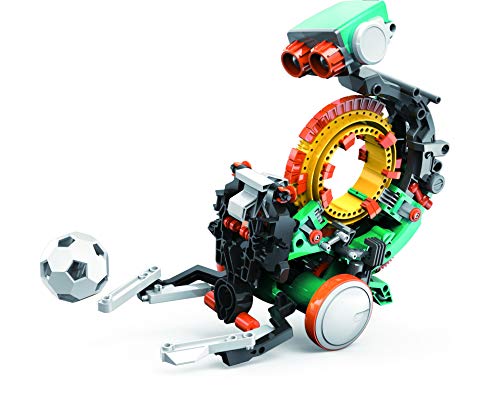
Mech 5 blends mechanical engineering with coding fundamentals. This mission-based robot introduces teens to sequencing, logic, and problem-solving through interactive tasks such as throwing, lifting, and drawing. The modular Coding Wheel interface lets learners snap on coding buttons to drive different functions, fostering a practical understanding of how software controls hardware. The kit is suitable for beginners and serves as a stepping stone to more complex robotics and automation projects while encouraging experimentation and iterative design.
Thames & Kosmos Bridges & Skyscrapers

This kit focuses on structural engineering concepts by challenging teens to build 20 different models that explore force, load, compression, and tension. With over 285 interchangeable pieces and a comprehensive 36-page manual, learners experiment with stability, weight distribution, and design decisions. The project-based approach helps students visualize how engineers balance safety, efficiency, and budget when designing real-world structures, making it ideal for long-term exploration of engineering principles.
ELEGOO UNO R3 Smart Robot Car Kit V4

The ELEGOO Uno R3 kit provides a comprehensive Arduino-based robotics platform for teens. It combines programming with hardware assembly, offering 24 module parts such as obstacle avoidance and line tracing, along with smartphone control compatibility. The kit emphasizes hands-on coding and electronics assembly, helping learners grasp sensors, actuators, and control logic. Its modular design supports progressive learning—from basic circuits to integrated robot systems—while encouraging experimentation and debugging as essential skills in engineering practice.
Snap Circuits Jr. SC-100

Snap Circuits Jr. introduces electronics exploration with a safe, modular approach. With over 100 possible projects and 29 parts, teens can assemble a wide range of circuits and devices, from alarms to light indicators. The color-coded, instruction-driven design reduces trial-and-error, enabling rapid feedback and a tangible sense of accomplishment. This kit lays a robust foundation in circuitry, signal flow, and system integration, making it a versatile starter or supplementary kit for continued STEM exploration.
Sillbird Solar Robot Building Kit

This solar-powered kit demonstrates renewable energy concepts while delivering hands-on robotics assembly. Teens can explore solar cells, motors, and simple circuitry to power moving parts, all outdoors or under bright light. The kit supports engineering thinking about energy conversion, efficiency, and environmental impact. It offers a screen-free learning pathway that encourages experimentation with different light sources to optimize performance and understand real-world limitations of solar technology.
Buying Guide: Key Purchase Considerations
- Learning goals: Identify whether the teen enjoys coding, mechanical design, or renewable energy to match a kit with a suitable learning trajectory.
- Skill level and guidance: Some kits offer extensive manuals and guided activities, while others emphasize open-ended exploration. Consider the teen’s prior experience and patience for troubleshooting.
- Expandability: Look for modular components or add-ons that allow increasing complexity over time, ensuring the kit remains engaging as skills grow.
- Hardware and software compatibility: Check whether a kit uses widely adopted platforms (Arduino, Raspberry Pi, or standard microcontrollers) for broader learning opportunities and community support.
- Safety and age suitability: Verify recommended ages and safety features, especially for kits involving small parts, hot surfaces, or sharp tools.
- Project variety: A diverse set of projects helps cover multiple engineering disciplines and sustains long-term interest.
- Outdoor and indoor usability: Solar-powered kits benefit from outdoor use, while electronics-heavy kits can function indoors in a controlled environment.
When choosing the right kit, consider a balance between guided learning and open-ended exploration. A well-rounded option often blends practical assembly with opportunities to modify designs, run experiments, and document results. For classrooms or group settings, kits with robust manuals and progression paths support structured learning, while individual teens may prefer kits that emphasize creativity and autonomous problem-solving.