Best Crawling Toys for Babies: Engaging Think-Boosting Picks That Promote Tummy Time and Movement
Crawling toys for babies combine entertainment with essential physical development, helping little ones build core strength, coordination, and explorer curiosity. This guide highlights five top-rated options that engage infants from newborn to toddler stages while supporting safe, interactive play. Each product section includes a quick overview of features and how it aids movement, sensory development, and early learning. Use the buying guide to compare options and choose toys that fit your child’s age, space, and preferences.
Summary Table Of Selected Products
| Product | Brand | Key Benefit | Age Range |
|---|---|---|---|
| Control Future Crawling Crab Baby Toy | control future | Obstacle-avoiding, interactive crawling motion with sounds and lights | 0-36 Months |
| Skip Hop Follow-Me Bee | Skip Hop | Three-stage development with gentle movement to encourage crawling | 5 months+ |
| Baby Einstein Chase & Tap Earl | Baby Einstein | Multi-mode interactive crawling with mirror, music, and learning content | 6+ Months |
| CubicFun Touch & Go Dino Toy | CubicFun | Obstacle-avoidant rolling toy with touch-activated motion and lights | 12+ Months |
| Plnmlls Crawling Crab | Plnmlls | Music, LED lights and self-mowering crab that responds to touch | 0-36 Months |
Control Future Crawling Crab Baby Toy

The Crawling Crab is designed to move fast and skitter sideways like a real crab, accompanied by sounds, music, and lights. It includes obstacle sensors that reverse direction when near obstacles, encouraging babies to chase and practice crawling motions. Suitable for tummy time and early exploration, this toy helps strengthen neck muscles and introduces cause-and-effect play. The product emphasizes safety and interaction, making it a worthy addition to a baby’s crawling toolkit.
Skip Hop Follow-Me Bee Tummy Time Crawl Toy
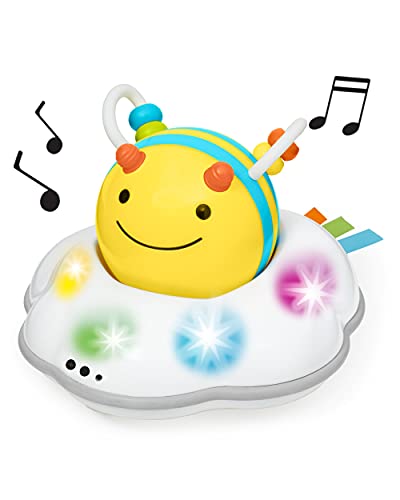
A three-stage crawling companion that grows with your baby. The easy-to-hold bee rattle provides initial tactile feedback and teething-friendly beads. In later stages, the cloud-like toy uses circular and then random movement to hold baby’s attention, fostering motor skill development and sensory processing. This toy supports steady progression from pre-crawling to independent movement while offering musical and visual engagement to sustain interest during tummy time and early exploration.
Baby Einstein Chase & Tap Earl Crawling Toy

This interactive crawling toy features Earl the Elephant with two modes: Music and Discovery. Press the Baby Einstein button to activate a stand for stationary play, or raise the stand to allow crawling and rolling. The toy teaches numbers, colors, and shapes in multiple languages, offering over 50 phrases, sounds, and melodies. With 2 modes and a mirror, it supports cognitive and motor development from six months onward, adapting as your baby grows into more mobile stages.
CubicFun Touch & Go Musical Light Dino

Designed with go and stop modes, this Dino toy encourages crawling and walking through touch sensors that cause nodding heads, music, and LED lights. It includes obstacle-avoidance features to prevent collisions while the universal wheels help it navigate around a room. The toy supports motor development and exploration, though note that it features sleep mode after extended music playback. Clean consumption and battery management are advised for optimal performance.
Plnmlls Crawling Crab Toy

The Plnmlls Crawling Crab offers music and LED lights with a built-in rechargeable battery. It features a mute button to turn off music while keeping the crab’s eyes illuminated for an engaging visual display. The toy is designed to encourage crawling by chasing the toy’s movements and avoiding obstacles through responsive motion. Its design targets early physical milestones and provides a visually appealing, interactive experience suitable for 0-36 months and toddler play alike.
VTech Wiggle and Crawl Ball

Note: This section features a top-rated option by VTech which emphasizes interactive play with 45+ songs and animal-themed buttons to boost fine motor skills, color and number recognition, and language exposure. While included here for context, the focus remains on products with crawling-enabled functionality. For families prioritizing music-driven play and animal recognition skills, this option can complement a crawling toy set but is not the primary crawling device in this selection.
Buying Guide: Key Purchase Considerations And Comparisons
- Age suitability and safety: Ensure the toy is appropriate for your child’s age and has non-toxic materials, secure batteries, and no small parts that could pose choking hazards. Look for certifications or safety standards when available.
- Movement and sensor features: Consider whether you want autonomous motion, obstacle avoidance, or remote-control features. Obstacle sensors help prevent frustration but may also require time for babies to learn control.
- Learning content: Some toys emphasize numbers, colors, shapes, or languages. If your goal is early cognitive development, prioritize those with varied modes and language options to grow with your child.
- Durability and cleaning: Babies explore with hands and mouths, so choose toys that are easy to clean and durable enough to withstand drops, droplets, and teething.
- Battery and power considerations: Review battery type and life, rechargeability, and the ability to turn off music or lights to reduce distractions during sleep or quiet play.
- Space and portability: Consider the room where the toy will be used. Some models are compact and magnetic, while others are designed for larger play spaces and active movement.
- Multi-stage usefulness: Toys that adapt through stages—from tummy time to crawling to stand-and-walk—offer longer value and can justify the investment across a baby’s early years.
- Maintenance and support: Check warranty information and customer support availability. Some brands provide easy replacement parts or guidance if a feature malfunctions.
These five crawling toys present a range of movement styles, sensory engagement, and developmental content. When selecting, balance entertainment with developmental goals, space constraints, and the child’s responsiveness to music, motion, and visual cues. The best choice often blends one primary motion toy with additional sensory or learning toys to create a well-rounded crawling play environment.