Best Counting Blocks for Math: Top Hands-on Cubes for Early Learners
Counting blocks and linking cubes offer a tactile path to early math mastery. The following selections emphasize counting to 100, patterning, addition and subtraction, and number sense through color-coded blocks, fractions, and place-value concepts. Each option supports classroom activities, homeschooling lessons, and independent play. The table below highlights five standout choices to help you compare at a glance.
| Product | Brand | What It Promotes | Best Use |
|---|---|---|---|
| MathLink Cubes Set of 100 | Learning Resources | Counting, one-to-one correspondence, basic operations, graphing | Kindergarten through early elementary |
| MathLink Cubes Big Builders 200 | Learning Resources | Imagination, critical thinking, early engineering | STEM play and maker activities |
| 5-in-1 Montessori Math Cube | MOTREE | Counting, fractions, time-telling, fine motor | Preschool to early kindergarten |
| SpriteGru Math Linking Cubes 100 | SpriteGru | Counting, color recognition, place values, early STEM | Home learning and classroom centers |
| edxeducation Math Cubes 100 | edxeducation | Shape sorting, counting, patterning, color concepts | Preschool to elementary review |
With these options, educators and parents can pick a set that matches their curriculum goals, classroom space, and the child’s stage of readiness. The following sections dive into each product’s strengths and use cases, drawing on the features provided by manufacturers.
Learning Resources MathLink Cubes – 100 Pieces
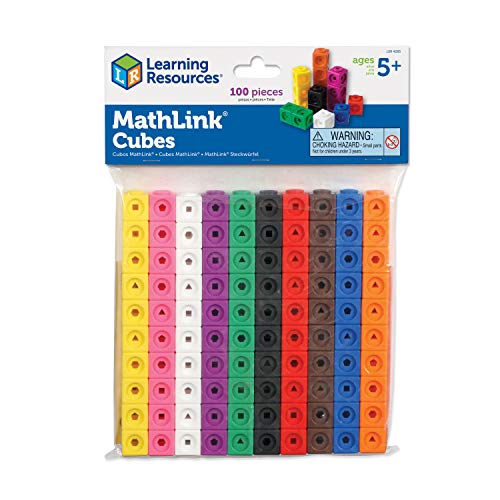
The 100-piece MathLink Cube set emphasizes foundational math skills through hands-on manipulation. Students practice counting to 100, one-to-one correspondence, skip counting, and basic operations like addition and subtraction. Additional activities support color and shape identification, patterning, and graphing, while also improving fine motor skills and eye-hand coordination. The cubes snap together on all sides, enabling complex patterning and grouping tasks. This makes it a practical choice for homeschool, classroom centers, or tutoring sessions where structured math practice is needed.
Learning Resources MathLink Cubes Big Builders – 200

This 200-cube set expands opportunities for creative math exploration. A larger quantity fosters group activities and collaborative problem solving. Children can design and build objects—think helicopters, robots, or animals—while reinforcing early math skills. The collection supports critical thinking by prompting learners to plan, count, compare, and reason through designs. An activity guide can help structure challenges that blend math with engineering concepts, making it ideal for classrooms and homeschool labs aiming to blend play with rigorous math practice.
MOTREE 5-in-1 Montessori Math Cube

This Montessori-inspired cube offers five engaging sides to reinforce early math concepts. A finger board with 13 number blocks and 10 flashcards builds number sense, while a fraction recognition board introduces parts of a whole in a tactile way. An abacus and a clock board cover counting, time-telling, and basic fractions. The multisensory approach supports diverse learners, including those who benefit from hands-on manipulation and visual prompts. It’s well-suited for individual practice or small-group activities in preschools or early elementary settings.
SpriteGru Math Linking Cubes – 100

SpriteGru’s 100-count math cubes come in ten colors, designed to support counting, color recognition, and early math operations. The cubes connect easily, helping children visualize quantities, place values, and simple equations. The color variety also supports sorting and patterning activities, encouraging creativity while reinforcing math concepts. This set is ideal for home learning or classroom centers that emphasize rapid practice, color-coding, and hands-on construction tasks.
edxeducation Math Cubes – 100

edxeducation’s Math Cubes offer a versatile set for counting, sorting, and patterning with five sides featuring different geometric shapes. The colorful counters are designed to spark counting and sorting activities across preschool to elementary levels. The cubes’ flexible design supports classroom manipulatives use, enabling students to explore color concepts, pattern sequences, and early geometric thinking while practicing number sense through repetition and variation.
Learning Resources STEM Explorers MathLink Builders – 100

STEM Explorers Builders emphasize critical thinking and fine motor skills. The set supports building animals, objects, and other structures, blending math with engineering and design challenges. Students press, pull, and twist the cubes to create, test, and iterate, which reinforces problem-solving strategies and STEM literacy. It’s especially useful for math centers, small-group tasks, and open-ended exploration in classrooms aiming to cultivate hands-on inquiry.
Buying Guide: Key Purchase Considerations
- Age and readiness: Select sets aligned with the child’s current math level, from counting and number sense to early operations and place value.
- Quantity versus space: Bigger sets support group activities and longer activities, but require more storage and table space.
- Structured versus open-ended play: If you want guided practice, choose sets with suggested activities; for creative exploration, prefer open-ended building cubes and patterns.
- Color and shape variety: A wide color range supports color-based sorting and patterning tasks, while varied shapes encourage spatial reasoning and geometry basics.
- Durability and material: Look for sturdy plastic cubes with secure snaps that resist frequent use in classroom or homeschool settings.
- Digital integration: Some sets come with activity guides or printable resources that align with common core or state standards, aiding lesson planning.
- Maintenance: Easy cleaning is a plus for classroom use; consider sets with simple components that are easy to wipe and dry.
Across these options, the common objective is to convert abstract math concepts into tangible experiences. Counting sequences, simple addition and subtraction, grouping, and patterning can all be approached with these linking cube sets. For educators, matching activities to curriculum milestones can help ensure steady progression while preserving the exploratory joy of learning.