Best Color Sorting for Toddlers: Fun Early Math Toys
Color sorting toys help toddlers master early math concepts, fine motor skills, and critical thinking through hands-on play. This guide highlights five engaging options that promote color recognition, counting, and problem-solving in a Montessori-inspired style. Each item includes practical features for multi-child play, easy cleaning, and durable design, making them suitable for home use, classrooms, or daycare activities.
| Product | Key Benefit |
|---|---|
| FQKIOMY Color Sorting Toys for Toddlers | Montessori-inspired color matching with animal themes |
| Learning Resources Farmer’s Market Color Sorting Set | Realistic play food for color recognition and sorting |
| Oomloid Counting Animals Montessori Toys | Counting, color matching, and sorting with tweezers |
| Wooden Montessori 3-in-1 Color Sorting Toy | Multi-lid, multi-sensory fine motor practice |
| Gencokok 12PCS Color Sorting Cups | 12 colors with safe wooden construction |
FQKIOMY Color Sorting Toys

The FQKIOMY set emphasizes Montessori-inspired learning with high-quality rubber materials that feature vibrant colors. The toys are softer than plastic, washable, and easy for little hands to grasp, supporting multi-child play and parent-child interaction. This bundle is designed to spark early mathematical interest through color sorting, grouping, and patterning, promoting sensory training and STEM curiosity for toddlers aged 3 and up. The animal-themed pieces provide engaging visuals that invite exploration and imaginative play.
Learning Resources Farmer’s Market Color Sorting Set
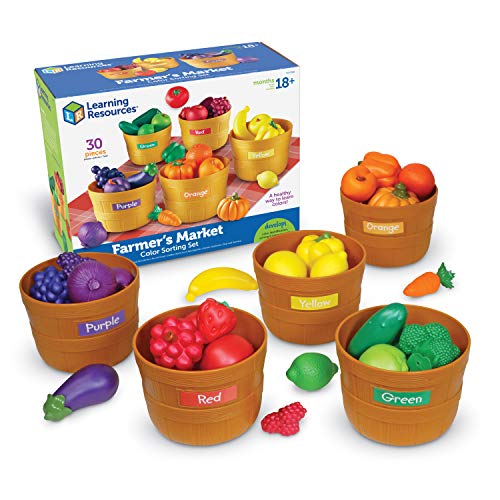
This set uses realistic play foods to build color recognition and sorting skills. Children explore new foods while practicing vocabulary and categorization, reinforcing preschool-ready skills. With color-coordinated play items and clear storage options, kids can develop sorting proficiency and early math concepts in an approachable, pretend-play context. The familiar grocery and kitchen themes help extend learning into daily routines and story-driven play.
Oomloid Counting Animals Montessori Toys

Oomloid’s counting animals come with 36 multi-colored animals, six rainbow sorting bowls, and tweezers, designed for 3- to 5-year-olds. The set supports counting, color matching, and grouping—core early math skills—while encouraging fine motor development through tweezers and sorting actions. It’s suitable for use at home, in classrooms, or in daycare settings, and the hands-on activity helps children engage deeply with number concepts and color families.
Wooden Montessori Color Sorting Toy

This 3-in-1 wooden Montessori set offers a geometric lid, coin-style lid, and a flat stick lid to promote a variety of fine motor skills. The design is screen-free and emphasizes hand-eye coordination, grip strength, and directional awareness through inserting sticks and sorting tasks. It aligns with Montessori principles by encouraging independent exploration and problem-solving, while remaining durable and simple to clean for everyday use with toddlers aged around 3 and up.
Gencokok 12PCS Color Sorting Cups

Gencokok’s 12-color sorting cups are crafted from wood with smooth edges for safe handling. Each cup features a distinct color and pattern to attract attention and stimulate curiosity. The cups are stackable, easy to clean, and designed to support fine motor development through grasping and sorting activities. The simple structure makes it ideal for quick setup at home or school centers and works well for parallel activities with peers.
Buying Guide
- Age and developmental stage: Look for sets specifically labeled for toddlers or early preschoolers (ages 1-5) to ensure appropriate difficulty and safety.
- Materials and safety: Favor non-toxic, durable materials (wood or rubber) with smooth edges and washable surfaces for hygiene and longevity.
- Learning goals: Consider whether the toys emphasize color recognition, number counting, sorting, or fine motor skills, and pick a mix that covers several goals.
- Multi-sensory value: Toys that combine sight, touch, and sometimes tweezers or lids offer richer learning experiences and better engagement.
- Storage and portability: Stackable cups, bowls, or compact sets facilitate tidy storage and easy transport for travel or classroom use.
- Play patterns: Choose options that support solo play, parent-child interaction, or collaborative groups to fit your routines.
- Durability and maintenance: Consider if parts are easy to clean and resistant to drooling, teething, or rough handling common with toddlers.
- Expansion potential: Some sets provide multiple ways to play (sorting, counting, stacking) which can extend the toy’s usefulness as a child grows.
- Price-to-value balance: Compare the number of components and the complexity of tasks to determine overall value for money.
- All-in-one versus primary sets: An all-in-one Montessori-inspired toy may offer broader learning, while single-focus sets are great for targeted skills.
These color sorting options collectively support early math readiness, hand-eye coordination, and cognitive development through hands-on, screen-free play. Each product presents a distinct approach—ranging from animal-themed and market-inspired play to wooden, multi-lid challenges—helping caregivers tailor activities to your child’s interests and developmental pace.