Best Cognitive Toys for Toddlers to Boost Color, Shape and Skills
Discover engaging, development-friendly toys designed to nurture early learning in toddlers. The following selections emphasize color recognition, shape sorting, fine motor skills, counting basics, and logical thinking—all essential building blocks for cognitive development in the toddler years.
| Product | Focus | Key Benefit |
|---|---|---|
| PEBIRA Montessori Toys | Color, Shape, Sorting | Early geometry and color differentiation through hands-on play |
| FOKI Floor Piano Mat | Music, Movement, Sequencing | Neuromotor coordination with auditory-visual cues |
| Dailyfunn Color & Shape Sorting | Color Sorting, Matching | Independent exploration with multiple learning modes |
| Esjay Busy Board | Fine Motor, Problem-Solving | Hands-on dressing skills and cognitive challenges on the go |
| Oomloid Counting Animals | Counting, Sorting, Math Basics | Foundational math through playful animal sorting |
PEBIRA Montessori Toys for Toddlers

PEBIRA’s wooden sorting and stacking puzzle blends Montessori-style learning with colorful, geometric play. The set includes 20 pieces in five colors and five shapes, designed to help babies and toddlers practice matching—targeting early shape recognition, color differentiation, and basic counting through hole counts for pegs. Its smooth, toddler-friendly edges support safe handling as children attempt various combinations, fostering hand-eye coordination and spatial awareness. A solid choice for children around ages 2 to 3 or 2 to 4, and it makes a thoughtful gift for developing minds.
FOKI Floor Piano Mat For Toddlers

The Foki Floor Piano Mat invites toddlers to move and explore while developing early cognitive and auditory skills. With bright colors, soft lighting, and engaging sounds, the mat supports crawling, stepping, and dancing activities that stimulate visual and auditory processing. It includes a range of built-in sounds, including animal noises and children’s melodies, helping kids associate actions with outcomes. This mat is suitable for young children from infancy up to preschool years, encouraging rhythm recognition, basic counting, and color awareness through interactive play.
Dailyfunn Montessori Toys Color & Shape Sorting
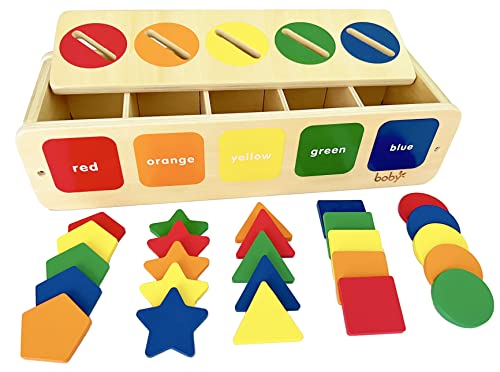
The Dailyfunn Color & Shape Sorting Learning Box offers 25 solid wood pieces in five colors and five shapes, complemented by 13 answer cards for an advanced mode. Grounded in Montessori principles, this set encourages independent exploration while supporting the development of hand-eye coordination, fine motor skills, and logical thinking. The simple design makes it ideal for home use, classrooms, or travel, enabling children to practice color matching and shape identification with clear, tactile feedback.
Esjay Toddler Busy Board Montessori Toys

Esjay’s busy board combines tactile activities with cognitive challenge across eight pages of play. Features include zippers, shoelaces, belts, buttons, clocks, calendars, shape matching, threading, and basic letter/number activities. The design targets fine motor development, hand-eye coordination, and early literacy and numeracy skills. The soft materials and portable form factor make it suitable for car trips, flights, or quiet play at home, while providing a progression of difficulty levels to keep toddlers engaged over time.
Oomloid Counting Animals Montessori Toys

This counting-and-sorting set from Oomloid includes 36 multi-colored animals, five sorting bowls, and tweezers. It promotes early math concepts like number counting, color matching, and category sorting—integral for building numerical sense and visual discrimination. The activity encourages kids to manipulate tools and balance core muscles during sorting, supporting both cognitive development and fine motor control. A versatile resource for home or classroom use, especially for children ages 3 to 5.
Buying Guide: Key Purchase Considerations And Comparisons
When selecting cognitive toys for toddlers, consider how each toy supports core developmental domains: fine motor skills, color and shape recognition, early math, language, and problem-solving. Here are practical factors to weigh:
- Age appropriateness: Check recommended ages and adjust expectations to your child’s current skill level. Some toys lean toward 2–4 years, others suit younger toddlers or early preschoolers.
- Open-ended play: Favor toys that encourage exploration with multiple possible outcomes, which fosters creativity and flexible thinking.
- Safety and materials: Look for smooth edges, non-toxic finishes, and sturdy construction, especially for wooden toys and busy boards with small parts.
- Portability and setup: Travel-friendly options (like busy boards) can support learning on the go, while larger mats and tables work best at home or in daycare settings.
- Skill progression: A well-rounded set covers color/shape sorting, counting basics, and fine motor tasks with escalating difficulty to maintain engagement over time.
- Interactivity level: Decide between tactile, auditory, and visual stimuli. For diverse learning, a mix of these modalities can reinforce cognitive concepts.
- Storage and care: Consider sizes, sorting capabilities, and ease of cleaning to keep the learning space organized and safe.
Comparing features, the Montessori-inspired options (PEBIRA, Dailyfunn, and Oomloid) emphasize structured sorting, color-shape matching, and counting through tangible materials. The FOKI piano mat adds a musical and kinetic dimension that reinforces sequence and rhythm. Esjay’s busy board integrates practical life skills with cognitive content, and the Oomloid set offers a math-focused sorting experience. Collectively, these toys provide a balanced curriculum: motor skills, sensory processing, and foundational math and language skills—all essential for early cognitive development in toddlers.