Best Coding Toys for Kids: Top STEM Robots and Kits
The following hand-picked coding toys for kids offer hands-on learning, creativity, and foundational STEM skills. This guide highlights five engaging options that work well for beginners and growing coders alike, spanning mechanical robots, circuit kits, and screen-free programming tools. Each selection emphasizes hands-on exploration, clear instruction, and safe play, helping children develop problem-solving, logical thinking, and perseverance through play.
| Product | Brand | Key Benefit |
|---|---|---|
| Teach Tech Mech 5 | Snap Circuits | Mechanical coding with mission-based play |
| Snap Circuits Jr. SC-100 | Snap Circuits | 100+ electronics projects with a colorful manual |
| Botley The Coding Robot Activity Set | Learning Resources | Screen-free coding with multiple activities |
| Thames & Kosmos My Robotic Pet | Thames & Kosmos | Color-sensing, unplugged coding experiences |
| ELECFREAKS Retro Coding Arcade | EF ELECFREAKS | Block and Python coding in a handheld arcade |
Teach Tech Mech 5, Mechanical Coding Robot
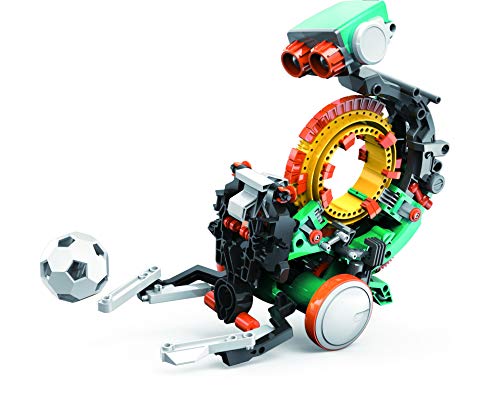
Mech-5 is a unique, entry-level mechanical coding robot designed to spark interest in engineering principles and basic programming. The mission-based design encourages kids to explore how gears, motion, and control systems work together. By snapping coding buttons onto the coding wheel, children can make the robot throw, lift, kick, and draw—combining hands-on construction with foundational coding concepts. This approachable setup supports early STEM skill development through tangible experimentation and guided challenges.
Snap Circuits Jr. SC-100 Electronics Exploration Kit

Snap Circuits Jr. SC-100 offers more than 100 possible projects using 28 brightly colored parts. This safe, hands-on electronics kit introduces young learners (ages 8+) to circuitry basics through engaging, easy-to-follow projects—like building a working flying saucer or a buzzer alarm. Its extensive project manual makes it a practical starter for exploration, experimentation, and incremental skill-building. The kit’s modular components support expansion with additional Snap Circuits sets for ongoing challenges and creativity.
Botley The Coding Robot Activity Set

Botley emphasizes screen-free coding with a user-friendly remote programmer that sends commands to Botley. The activity set supports early STEM skills through hands-on games, predictive thinking, and problem-solving. Perfect for ages 5+, Botley already includes components for immediate play and learning, with additional activities to extend coding practice. The bundle encourages independent play and collaborative challenges, helping children grasp sequencing, loops, and logic without digital screens.
Thames & Kosmos My Robotic Pet: Coding Chameleon

This color-sensing, gesture-responsive chameleon offers an unplugged coding experience. The robot uses a color sensor, infrared sensor, and RGB LEDs to react to action cards, enabling kids to program responses without screens. Its 15-inch length and articulated joints simulate realistic movement, delivering engaging, hands-on instruction in basic robotics, color recognition, and cause-and-effect relationships. The emphasis on physical cards and sensors makes learning intuitive and entertaining for elementary-age learners.
ELECFREAKS Retro Coding Arcade
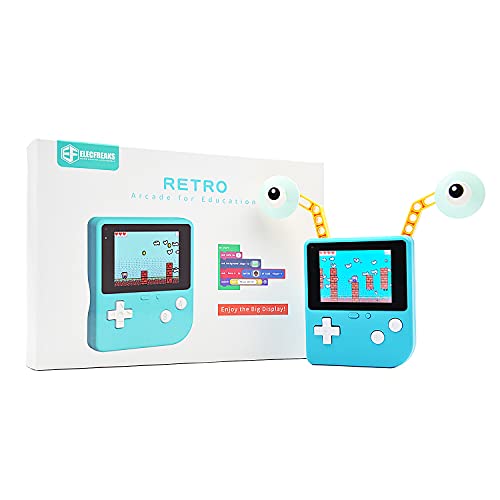
This programmable handheld arcade combines Makecode blocks and Python, enabling kids to design and test their own games. The built-in sensors expand project possibilities, and the device introduces kids to block-based programming and text-based coding in an approachable, game-focused format. The Retro Arcade supports progressive learning, from basic game logic to more complex programming concepts as kids gain confidence with Makecode and Python.
Botley The Coding Robot Activity Set
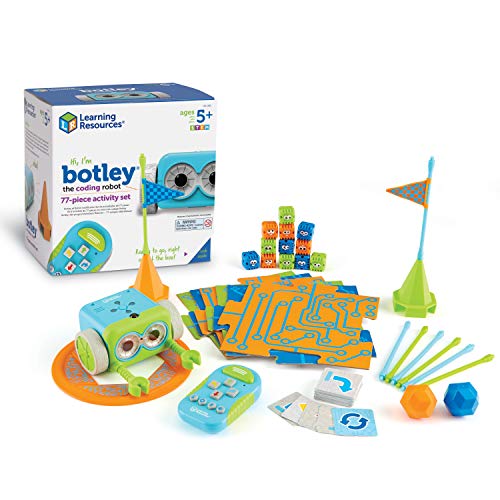
Botley’s screen-free design encourages active exploration of coding fundamentals, including sequencing, loops, and problem solving. This set includes additional accessories to expand activities and keep learners engaged beyond initial play. Botley’s simple remote programmer and color-coded cards provide a clear path from guided tasks to independent challenges, supporting growth from ages 5+ onward.
Buying Guide: Key Purchase Considerations
- Age appropriateness: Look for kits designed for your child’s age to ensure safe, manageable challenges and an opportunity to grow with the product.
- Screen-free options: For younger children, screen-free models foster tangible interaction, reducing passive consumption while building computational thinking.
- Learning progression: Choose toys with scalable challenges, whether through additional projects, advanced modes, or modular components that can be added over time.
- Durability and safety: Consider sturdy materials, non-toxic components, and reliable safety features for repeated handling and play in varied environments.
- Hands-on vs. digital balance: Some kits emphasize physical construction and sensors; others introduce coding through block-based or Python interfaces. A mix can support well-rounded skills.
- Expansion potential: If the child enjoys a product, assess compatibility with other kits in the same ecosystem to broaden projects and maintain interest.
- Educational alignment: Look for products that reinforce foundational STEM concepts—cause and effect, sequences, loops, and basic robotics—while offering clear instructions and learning goals.
- Maintenance and batteries: Check whether batteries are included or required and how easy it is to replace them; this impacts ongoing usability without frequent shopping interruptions.
In choosing coding toys for kids, it helps to map each option to your child’s current interests—mechanical systems, electronics, or game design—and plan a progression path that integrates hands-on exploration with incremental coding challenges. The selections above emphasize safe, engaging, and educational play that aligns with diverse learning styles, from screen-free manipulation to beginner-friendly coding interfaces.