Best Circuit Board Kits for Kids: Snap Circuits and More
Discover engaging, safe, and educational circuit kits designed for young learners. This guide highlights five hands-on options that make electronics approachable through colorful parts, clear instructions, and real-world projects. Each kit emphasizes STEM fundamentals like circuits, switches, and basic engineering concepts while keeping playtime fun. Explore how these kits support hands-on learning, safe assembly, and scalable challenges as kids grow their skills.
| Product | Brand | Projects Count |
|---|---|---|
| Snap Circuits Jr. SC-100 | Snap Circuits | 100+ |
| Snap Circuits Classic SC-300 | Snap Circuits | 300+ |
| Snap Circuits Beginner SCB-20 | Snap Circuits | 21 |
| Snap Circuits Arcade SCA-200 | Snap Circuits | 200+ |
| Snap Circuits 203 | Snap Circuits | 200+ |
Snap Circuits Jr. SC-100 Electronics Exploration Kit

Designed for ages 8 and up, the Snap Circuits Jr. kit introduces basic electrical engineering concepts through safe, modular components. The colorful, clearly labeled parts snap together to create working circuits and gadgets. The included project manual guides experimentation with more than 100 projects, reinforcing skills as kids progress from simple timers to more complex devices such as alarms and sound-makers. The kit contains 28 parts, providing a scalable learning path without overwhelming young minds. Its hands-on format supports tactile learners and helps kids grasp circuit flow in a concrete way.
What to know
- Strengths: Safe, durable parts; clear project progression; encourages problem-solving and planning.
- Ideal for: Beginners who want immediate, tangible results and a gentle introduction to circuitry.
- Considerations: Limited hands-on complexity may require additional kits for advanced learners.
Snap Circuits Classic SC-300 Electronics Exploration Kit
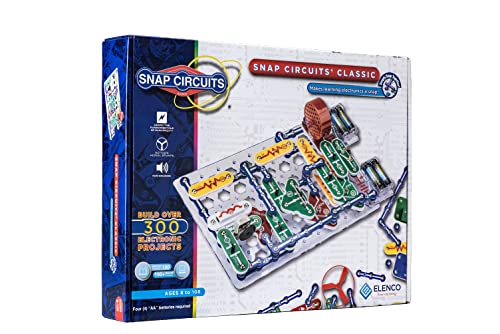
For learners ready to expand, the Classic SC-300 offers more than 300 projects and over 60 components. This kit doubles as a robust platform for exploring AM radios, burglar alarms, doorbells, and other real-world devices. The full-color project manual helps students visualize circuits and understand how different components interact. This kit is well-suited for independent exploration and group projects, allowing kids to experiment with more complex assemblies while building confidence in engineering concepts.
What to know
- Strengths: High project variety; durable parts; strong value for the breadth of activities.
- Ideal for: Kids who want deeper exploration and collaborative STEM play.
- Considerations: Larger footprint; may require table space and patience for assembling intricate circuits.
Snap Circuits Beginner SCB-20

The Beginner kit targets younger audiences (ages 5-9) with kid-friendly, simple projects that introduce fundamental concepts like switches and circuits. The components are designed for quick, frustration-free assembly, helping newcomers experience a sense of accomplishment after each project. The kit emphasizes hands-on learning, problem-solving, and planning, encouraging kids to think through circuit paths as they complete 21 unique experiments. It’s an accessible gateway into electronics that builds confidence early on.
What to know
- Strengths: Age-appropriate challenges; straightforward assembly; strong safety features for younger children.
- Ideal for: Early STEM learners who benefit from quick wins and clear outcomes.
- Considerations: Fewer projects than more advanced kits; may outgrow after a period of use.
Snap Circuits Arcade SCA-200

Arching beyond basics, Arcade SCA-200 delivers a multimedia experience with 36 pieces that assemble into 20+ games featuring sounds and lights, plus more than 200 additional circuit projects. The modular approach fosters rapid experimentation and playful competition among friends or family. Kids can even create personalized LED messages as they learn about circuits, electricity, and logical sequencing. This kit demonstrates how simple components can combine to produce engaging, interactive results, reinforcing practical electronics literacy.
What to know
- Strengths: Rich project count; entertaining, game-oriented builds; strong value for engagement.
- Ideal for: Kids who enjoy interactive play and shared learning experiences.
- Considerations: Slightly larger scale; some projects may require careful handling of multiple parts.
Snap Circuits 203 Electronics Exploration Kit

The 203 kit offers a robust platform with over 200 projects and 42 snap modules. It’s designed to sustain longer-term engagement as kids explore deeper circuits, alarms, doorbells, and beyond. The full-color manual supports independent study while enabling collaborative challenges. Like other Snap Circuits sets, it emphasizes safe, snap-together components that encourage experimentation, planning, and iteration. This kit is a versatile option for classrooms, homeschool setups, or family STEM nights.
What to know
- Strengths: Broad project library; scalable complexity; durable components for repeated use.
- Ideal for: Intermediate learners seeking a more extensive circuit portfolio.
- Considerations: Requires space for setup and storage of many parts.
Buying Guide: Key Considerations For Circuit Board Kits For Kids
- Age appropriateness and safety: Choose kits with clearly labeled age ranges and safety features that match your child’s development stage. Younger kids benefit from simple, intuitive parts and color-coded components; older kids can handle more complex projects.
- Project variety and progression: Look for kits that start with foundational concepts and progressively introduce more challenging circuits. A broad library helps sustain interest over time.
- Instruction quality: Colorful manuals with step-by-step diagrams reduce frustration and support independent exploration. Consider kits that include troubleshooting tips and suggested projects beyond the basics.
- Component durability and compatibility: Snap-together systems are beginner-friendly, but ensure parts are robust and easy to connect. Check whether parts are compatible across kits to expand future options.
- Learning outcomes: Seek kits that teach core STEM ideas like circuitry, signal flow, feedback, and basic electronics terminology. Some kits add real-world context with projects like alarms, radios, or simple games.
- Space and organization: Plan for storage of parts and a dedicated workspace. Larger kits offer more projects but require more space.
- Social and collaborative value: Some kits support group projects or classroom activities, which can enhance teamwork and communication skills.
In summary, these kits provide structured, hands-on experiences that translate abstract electronics concepts into tangible, interactive play. The Snap Circuits line offers scalable options from beginner to advanced, with a consistent emphasis on safety, modular design, and project-based learning. Whether for individual exploration, classroom use, or family STEM nights, these circuit board kits can help kids build confidence in engineering fundamentals through guided experimentation and repeated practice.