Best Building Kits for 12-Year-Olds: STEM Toys for Young Makers
Building kits that engage 12-year-olds in STEM topics can spark lasting curiosity and practical problem-solving skills. The following hand-picked selections emphasize hands-on learning, clear instructions, and expandable projects. Each kit blends engineering concepts with creativity, helping kids build confidence as they explore mechanisms, circuits, and robotics. Below is a concise snapshot of five top options, followed by in-depth product sections and a practical buying guide to help you choose the right fit for your learner.
| Product Name | Brand |
|---|---|
| Klutz Lego Gear Bots Science/STEM Activity Kit | Klutz |
| Smartivity DIY Robotic Mechanical Hand | Smartivity |
| Stem Projects Toys for Boys age 8-12 | choopheme |
| Henoda Robot Toys for 8-16 Year Olds | Henoda |
| STEM 13-in-1 Solar Power Robots | Bottleboom |
Note: Each selection targets kids around age 12, though many can be enjoyed by slightly younger or older children with appropriate guidance. The kits emphasize hands-on construction, experimentation, and safe, screen-free exploration of science, technology, engineering, and math concepts.
Klutz Lego Gear Bots Science Kit

The Klutz Lego Gear Bots kit combines LEGO Technic bricks with papercraft to create eight kinetic creatures driven by axles, cams, and cranks. The 64-page book embeds STEM content directly into the build process, providing a structured yet open-ended exploration of engineering in everyday machines. Clear, step-by-step instructions guide the assembly, while the included LEGO elements ensure a tangible connection between theory and hands-on practice. This kit supports tactile learning and spatial reasoning as learners experiment with gears and motion.
Key features include: a complete set of LEGO elements, eight physics-driven builds, and a focus on mechanical fundamentals. It is well-suited for learners who enjoy hands-on construction and appreciate visual, kinesthetic learning. The blend of storytelling and engineering makes it a strong choice for a family STEM activity or classroom project.
Smartivity Robotic Mechanical Hand

Smartivity’s mechanical hand kit emphasizes a high-engagement, screen-free build that yields a functional robotic hand. The step-by-step manual supports steady progress, with parts designed to assemble into a working model that demonstrates fundamentals of leverage, linkages, and actuation. The kit appeals to kids who enjoy engineering challenges and want a tangible takeaway from a STEM project that can be played with after assembly. It also positions itself as a strong gift option for curious minds.
Highlights include: a comprehensive parts set, replacement parts available, and intuitive instructions that enable independent or guided building. The project’s emphasis on real-world mechanics makes it a practical bridge between classroom science and home experimentation. While the instructions are clear, the open-ended potential for modification invites experimentation and deeper inquiry into how mechanisms function.
Stem Projects Toys: Bluetooth Speaker & FM Radio Kit

This kit offers a dual-project challenge: build a Bluetooth speaker and a radio. It includes clear assembly instructions and requires only basic tools, making it accessible for young builders. The projects promote practical electronics knowledge, such as circuitry, soldering concepts, and signal reception. It’s a tidy, two-project kit that gives learners a multi-skill experience—from wiring to enclosure design—and supports teamwork when parents join in on the assembly and testing phases.
Notable points: included projects align with STEM learning goals, the parts are organized for easy setup, and the experience can inspire conversations about audio electronics, signal processing, and hands-on tinkering. It’s especially appealing for kids who enjoy music, sound, and DIY gadgets, providing a meaningful, repeatable learning arc.
Henoda Robot Kit With APP or Remote Control
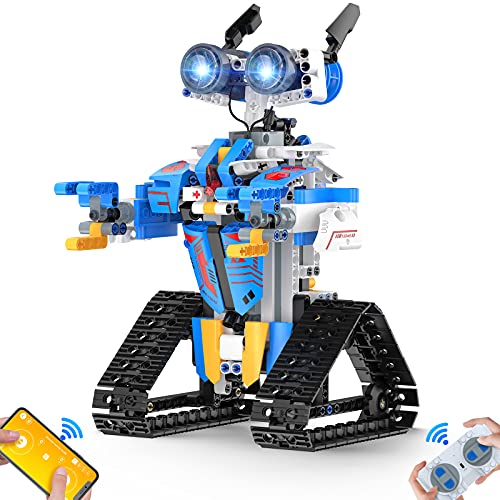
Henoda’s programmable robot kit blends 468+ building pieces with remote control and app-based interaction. Kids can explore multiple control modes, including Bluetooth app control, 2.4GHz remote, and movement in multiple directions. The model supports STEM exploration through hands-on construction, programming, and motion design, helping learners understand robotics concepts like articulation, sensors, and coordination. It’s a solid choice for families seeking a more sophisticated, modular robotics experience that can grow with the child’s skills.
Essentials include: diverse motion capabilities, multiple control options, and a structure that invites experimentation with autonomous and remote-guided play. The kit’s breadth makes it a candidate for longer-term engagement, with potential for custom programming and further robotics projects as the learner advances.
STEM 13-in-1 Solar Power Robots

This solar-powered robot kit offers 13 different builds, designed to move on land or water using solar energy. It includes a range of gears, plates, tires, and shafts that can be reassembled into new configurations. The kit emphasizes renewable energy concepts, simple motors, and the physics of motion. Non-toxic ABS materials ensure safe play, while the open-ended design encourages experimentation and iterative building—perfect for curious minds who enjoy solving engineering challenges with sustainable energy in mind.
Considerations include: solar power emphasis over batteries, the ability to disassemble and reconfigure, and a depth of projects suitable for guided or independent exploration. The kit’s versatility makes it a versatile addition to a learning toolbox, enabling a spectrum of difficulty as the child’s understanding deepens.
Buying Guide
When selecting building kits for a 12-year-old, consider the following dimensions to match skills, interests, and safety. These factors help ensure a balance between challenge and achievable success.
- Age and skill level: Look for kits that specify 8-14+ or 9-12-14 ranges. If a learner is highly proficient, choose more complex sets with programmable elements or multiple build options.
- Project scope and goals: Decide whether you want a single project with repeatable upgrades or a modular kit with many builds. Multi-project sets encourage longer engagement and deeper understanding of engineering workflows.
- Power source: Solar-powered kits teach energy concepts, while battery-powered or remote-controlled kits emphasize control systems. Consider the child’s interest in eco-friendly designs and the availability of batteries or solar components.
- Learning modes: Some kits emphasize open-ended exploration, while others provide structured lessons embedded in manuals. Both approaches have merit; hybrid kits can offer guided learning with space for experimentation.
- Safety and materials: Ensure non-toxic plastics and smooth edges. ABS plastics are common and generally durable. Check for small parts that could pose choking hazards for younger siblings and supervise as needed.
- Instruction quality: Clear, step-by-step guides with images help maintain momentum. Look for kits that include troubleshooting tips or replacement parts availability.
- Future expansion: Some sets integrate with additional kits or have open-ended potential for programming, added sensors, or alternative builds. This modularity can extend the learning curve well beyond the initial build.
- Social and family learning: Projects that support collaborative builds or parent-child participation can strengthen communication about science concepts and boost motivation.
In summary, the best building kits for a 12-year-old strike a balance between hands-on construction, conceptual clarity, and opportunities for creative experimentation. Whether the learner gravitates toward gears, robotics, or electronics, there are versatile options that support progressive skill-building and sustained curiosity.