Best STEM Toys for Tweens: Engaging Projects That Build Real Skills
tween-age learners thrive on hands-on challenges that blend curiosity with practical problem solving. This guide highlights five standout STEM toys that balance creativity, engineering, and critical thinking for tweens. Each product offers interactive experiences—from pneumatic hands to gravity mazes and solar robots—designed to expand science literacy while keeping kids engaged, motivated, and excited to explore.
| Product | Brand | Key Benefit |
|---|---|---|
| Thames & Kosmos Mega Cyborg Hand | Thames & Kosmos | Hands-on hydraulics and adjustable joints for precision gripping |
| ThinkFun Gravity Maze | ThinkFun | Critical thinking through marble-based engineering challenges |
| Smartivity DIY Robotic Mechanical Hand | Smartivity | Screen-free construction and mechanical design for young engineers |
| ANNISOKA STEM Electronics Kits (Stocking Stuffers) | ANNISOKA | DIY radios and speakers combine 3D puzzles with circuit theory |
| Lucky Doug Solar Power Kits | Lucky Doug | Solar-powered robotics to explore renewable tech |
These selections emphasize safe, engaging projects that illustrate core STEM concepts without overwhelming beginners. Each entry provides hands-on practice, clear instruction, and room to grow with more complex challenges as tweens develop confidence.
Thames & Kosmos Mega Cyborg Hand

Build a wearable hydraulic hand operated by your fingers, using air pressure and water to move each finger joint. This kit demonstrates pneumatic systems and adjustable finger joints for precise movement, enabling tweens to explore mechanical design and force transmission. No motors or batteries are required, making the project tactile and reliable for focused experimentation. The hands-on assembly deepens understanding of hydraulics and control as users lift and grip objects with adjustable precision.
ThinkFun Gravity Maze

Gravity Maze combines engineering puzzles with marble mazes to challenge logical thinking and planning. Tweens arrange towers, set a marble path, and work toward a specific target, fostering spatial reasoning, sequence planning, and perseverance. The kit features multiple levels and designs, allowing extended play and progressively harder challenges that align well with classroom STEM tasks or family game nights.
Smartivity DIY Robotic Mechanical Hand

Smartivity presents a captivating mechanical build that yields a functioning robotic hand. The kit emphasizes step-by-step instructions and a screen-free, hands-on construction process. It supports age-appropriate STEM learning from 8 to 14 and includes a lifetime supply of replacement parts, ensuring lasting engagement. As kids assemble the mechanism, they explore gears, linkages, and basic robotics concepts while developing problem-solving and fine motor skills.
ANNISOKA STEM Electronics Kits (Stocking Stuffers)
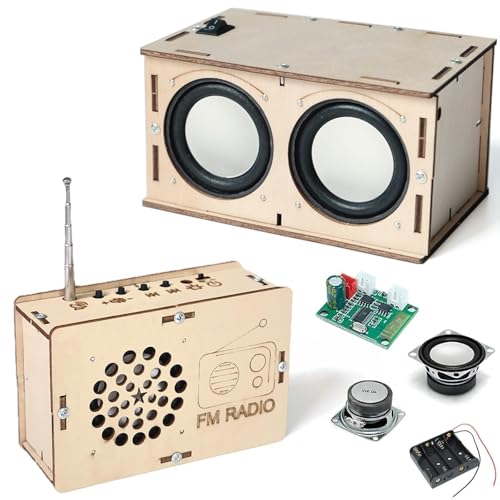
This two-pack focuses on electronics and radio concepts through hands-on projects like building a radio and a speaker. It blends 3D puzzle elements with electrical engineering tasks, offering a tangible pathway to understanding circuits, sound production, and wireless transmission. The kits are designed for ages 8–14 and up, making them suitable for tweens seeking more advanced STEM challenges that stay approachable and fun.
Lucky Doug Solar Power Kits
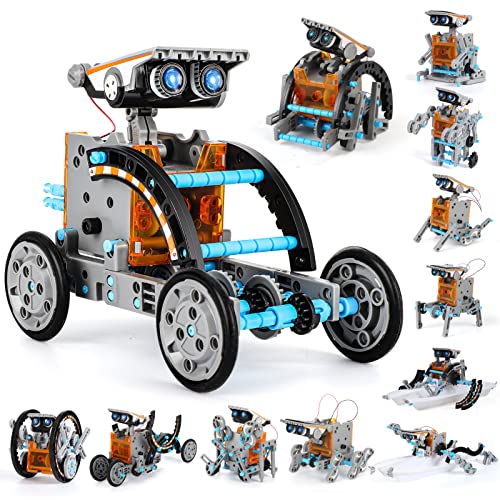
Solar-powered robotics from Lucky Doug introduces renewable energy concepts through hands-on construction. The 12-in-1 kit enables tweens to build multiple robot configurations powered by sunlight, encouraging exploration of solar energy, circuitry, and motion. Clear instructions help learners assemble and experiment, while the solar focus connects science to real-world technologies, reinforcing sustainable thinking.
Buying Guide: Key Purchase Considerations
- Age and complexity: Choose kits that match a tween’s current skill level while offering room to grow. Look for adjustable difficulty, modular projects, and clear, step-by-step instructions.
- Hands-on engagement: Prioritize kits with tangible components (gears, pistons, solar cells, circuits) to maximize experiential learning and reduce screen time.
- Educational value: Seek projects that clearly demonstrate core concepts such as hydraulics, gravity, circuitry, energy, and robotics. Look for materials that explain the science behind the activity.
- Durability and parts replacement: Some kits include replacement parts or lifetime guarantees, which helps sustain long-term use and ongoing curiosity.
- Maintenance and safety: Ensure kits use safe, age-appropriate materials with non-toxic components and straightforward cleanup.
- Cross-disciplinary appeal: Options that blend science with engineering, math, or language skills can support a well-rounded STEM education.
- Storage and portability: Compact kits or those with organized components are easier to store and carry for travel or after-school activities.
When selecting a tween-friendly STEM toy, consider how it encourages problem solving, experimentation, and iterative thinking. The best options provide not just a single activity, but a pathway to build confidence as students tackle more complex challenges over time.