Best Play Stoves for Toddlers: Engaging Kitchen Sets for Little Chefs
Discover top-rated play stove sets that spark imagination, promote fine motor skills, and fit busy toddler play spaces. This guide highlights five highly-rated options, each offering interactive lights, sounds, and realistic features to inspire creative pretend play. Whether you’re shopping for indoor setup or compact play corners, these picks balance durability, safety, and engaging design for toddlers aged 2 and up.
| Product | Brand | Key Features |
|---|---|---|
| Step2 Best Chefs Kitchen Playset | Step2 | Open design, working oven/refrigerator doors, lights and sounds, 25-piece accessory set |
| CUTE STONE Pretend Play Kitchen Sink | CUTE STONE | Stove with lights and sounds, running faucet, color-changing utensils |
| Hape Toddler Kitchen Set | Hape | Wooden cookware; stove knobs click; compact storage |
| PLAY Toy Oven Kitchen Playset | PLAY | Five rotary controls, 11 accessories, lights and oven timer with “ding” |
| Tiny Land Play Kitchen | Tiny Land | Enhanced storage with cabinets, acrylic doors, easy-to-reach design |
The following sections detail five standout options, with practical insights on size, play value, and durability to help caregivers choose the best fit for their child’s age and play style.
Step2 Best Chefs Kitchen Playset

The Step2 Best Chefs Kitchen Playset offers an open layout with a modern color scheme designed to fit both indoor playrooms and outdoor patios. It stands about 35.8 inches tall and 34.4 inches wide, providing ample space for multiple children to engage in social pretend play. Features include a working oven and refrigerator, a pass-through kitchen window, and a stove area that lights up with corresponding sounds. The set includes 25 accessories to support varied cooking activities, from baking to faux grocery runs. Storage is straightforward with hooks and shelves, plus a recycling bin to keep play areas tidy after sessions. This setup supports collaborative play while teaching organization skills as kids learn where each piece belongs when the play ends.
Key considerations: assembly is typically straightforward for caregivers; the plastic construction is durable for rough toddler handling; the interactive elements enhance sensory engagement through sound and light cues that mimic real kitchen actions.
CUTE STONE Pretend Play Kitchen Sink Set

This pretend kitchen sink toy emphasizes realistic water play with a working faucet and an electric design that creates a smooth flow for a lifelike washing experience. The stove area lights up and generates cooking sounds to deepen immersion. A varied set of play tableware and utensils expands role-play opportunities, allowing children to simulate washing, cooking, and serving meals. The construction aims to stand up to frequent use by toddlers, and the included utensils are sized for small hands to grip easily. It’s a compact option for limited spaces while still enabling cooperative play and imaginative storytelling around mealtime rituals.
Key considerations: consider whether your child enjoys water play and how often you can safely supervise water-related activities. The included accessories help justify ongoing play value and reduce the need for additional purchases.
Hape Toddler Kitchen Set

The Hape wooden kitchen set brings a compact, naturally finished design with a few crucial play elements: a stove with realistic clicking knobs, a pot, a pan, and basic utensils. The wood construction encourages a different sensory feel compared to plastic sets and supports durable daily use. Storage is integrated into the set, helping toddlers learn to tidy up after play and encouraging repeated, organized play sessions. Compatible with other Hape play-food items, this set extends opportunities for imaginative cooking adventures while supporting fine motor skill development as kids manage small parts and simulate realistic cooking motions.
Key considerations: wooden sets tend to be heavier and more durable but may require occasional wipe-down care. The model suits toddlers who enjoy kitchen role-play with a more traditional toy feel and longer-lasting construction.
PLAY Toy Oven Kitchen Playset
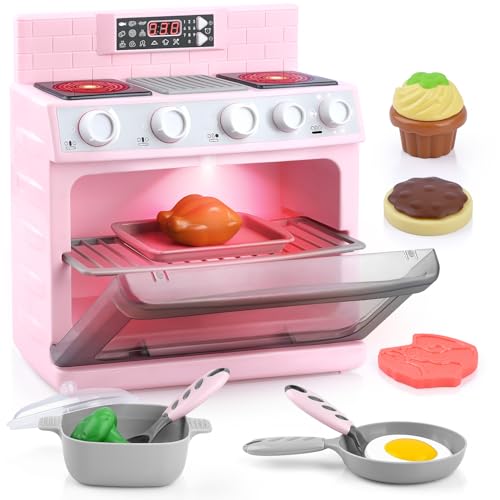
The PLAY oven playset centers on a multi-function cooking world with five rotary buttons controlling different cooking zones, plus 11 accessories to support diverse pretend meals. Lights and sounds simulate a real kitchen environment, and a built-in oven timer offers a realistic ding when time ends. This feature aids in teaching sequencing and time management through play. The arrangement encourages children to experiment with different cooking techniques—from roasting to frying—while promoting creativity and cognitive development in a structured pretend play setting.
Key considerations: the variety of buttons and sounds can captivate curious toddlers, but caregivers should monitor small parts during early use. The timer feature adds a storytelling element that can be integrated into classroom-style activities or family playtime.
Tiny Land Play Kitchen

The Tiny Land play kitchen focuses on enhanced storage and organization with multiple compartments, transparent acrylic doors, hooks, and four felt bins. The design helps toddlers sort utensils and keep play areas neat, reinforcing early math and cognitive skills through sorting activities. A pretend stove, sink, cupboards, pots, and utensils create a realistic cooking environment that supports open-ended play. The organized layout promotes independent play and fosters a sense of responsibility as children learn where items belong after use. This model balances compact footprint with a satisfying amount of play value for young chefs.
Key considerations: highly organized storage supports tidy play sessions, and acrylic doors provide visibility to encourage responsibility. The wooden or mixed-material construction can vary in weight and durability depending on the exact model you select.
Buying Guide: Key Purchase Considerations And Comparisons
- Age and safety: Look for rounded edges, non-toxic finishes, and parts sized for toddlers to minimize choking hazards. Models labeled for ages 2-3 typically balance play value with safety for younger kids.
- Durability and materials: Plastic sets tend to be lighter and easier to clean, while wooden sets offer a durable, tactile feel and may retain color and shape longer with active play.
- Interactivity: Consider whether the child enjoys lights, sounds, or water play. Interactive features can boost engagement but may require supervision, especially with small parts or water components.
- Storage and space: If you have limited room, prioritize sets with built-in shelving, hooks, or compact footprints. Enhanced storage options promote tidy, independent play.
- Upgrade potential: Some sets pair with additional accessories or food items from the same brand. This can extend play value as a child’s cooking interests evolve.
- Educational value: Practical pretend play supports language development, sequencing, and narrative skills. A mix of sets with different textures (wood, plastic) can offer varied tactile experiences.
- Maintenance: Check cleaning requirements—wooden sets may need wipe-down care, while plastic varieties can tolerate more frequent washing.
- Price and longevity: While prices vary, consider the long-term engagement and the likelihood that a given set will see continued use as a child grows.
Across these five options, caregivers can select a play stove that fits the child’s curiosity, available space, and preferred play style—whether they lean toward realistic wooden cookware, bright plastic sets with lights, or compact designs that store neatly between sessions. Each choice supports imaginative play, social interaction, and early practical skills that lay a foundation for creative cooking narratives and cooperative problem-solving.